Buying guide
The best years to buy a Land Cruiser, Defender or G-Wagon (and the years to avoid)
The best model years to buy a classic Toyota Land Cruiser, Land Rover Defender or Mercedes G-Wagon, the years that need extra care, and why condition…
The legends
The definitive four-wheel drive for going far and coming home: from the FJ40 to the 80 and 100 Series.
Toyota’s four-wheel drive began in 1951 with the BJ, a rugged utility vehicle that famously climbed to the sixth station of Mount Fuji during testing. In 1954 it was renamed Land Cruiser, and over the following decades the name became synonymous with reliability in the harshest places on earth: the Australian outback, the Middle East, Africa and the Andes.
The secret was never cleverness. It was conservatism. Toyota built Land Cruisers with heavy frames, under-stressed engines and axles, and components designed to survive long service intervals and poor fuel. The result is a vehicle that aid agencies, mining companies and explorers trust when failure is not an option.
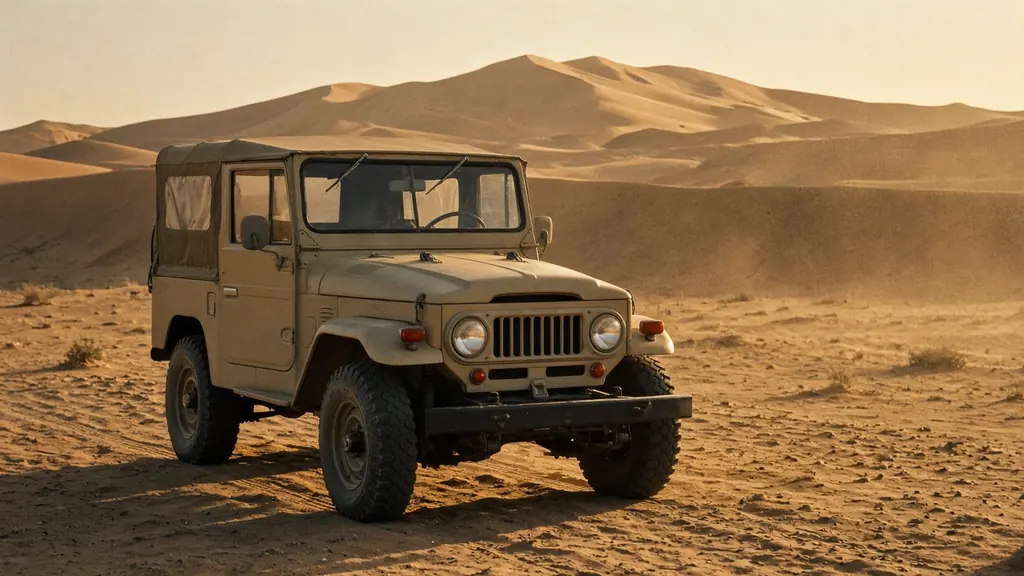
The Toyota BJ prototype is developed as a light utility four-wheel drive.
The vehicle is renamed Land Cruiser.
The 40 Series launches. The FJ40 becomes the definitive classic, with a 3.9-litre F-series inline six.
The FJ55 station wagon broadens the Land Cruiser’s appeal to families and long-distance travellers.
The 4.2-litre 2F engine replaces the F in many markets.
The 60 Series wagon arrives, adding comfort while keeping leaf springs and solid axles.
The 70 Series replaces the 40 Series as Toyota’s working Land Cruiser. It remains in production for some markets decades later.
The 80 Series introduces coil springs front and rear, full-time four-wheel drive and optional front and rear locking differentials.
The 100 Series brings independent front suspension and, in many markets, a V8 petrol engine.
| FJ40 | 80 Series (FZJ80) | 100 Series (UZJ100) | |
|---|---|---|---|
| Production | 1960–1984 | 1990–1998 | 1998–2007 |
| Typical engine | 3.9 L F / 4.2 L 2F inline six | 4.5 L 1FZ-FE inline six | 4.7 L 2UZ-FE V8 |
| Suspension | Leaf springs, solid axles | Coil springs, solid axles | Independent front, coil rear |
| Four-wheel drive | Part-time, two-speed transfer | Full-time, lockable centre | Full-time, lockable centre |
| Wheelbase (SWB) | about 2,285 mm (90 in) | about 2,850 mm (112 in) | about 2,850 mm (112 in) |
| Character | Simple, iconic, restorable | Comfortable, near-indestructible | Refined, powerful tourer |
The Land Cruiser matters because it proved that a four-wheel drive could be both tough and dependable over enormous distances with minimal maintenance. In much of the world, it is still the vehicle people trust their lives to. For classic owners, that reputation translates into long service life, strong values and a global network of parts and expertise.
It also matters because each generation offers something different. The FJ40 is a pure, simple classic and a superb restoration project. The 80 Series is arguably the best all-round classic overlander ever built. The 100 Series offers modern comfort with classic durability. Together they make the Land Cruiser the most practical of the three legends to own and use.
Our editors have written in-depth guides for Land Cruiser owners. Start with the right accessories, check an 80 before you buy, or restore a 40.
From the journal
Buying guide
The best model years to buy a classic Toyota Land Cruiser, Land Rover Defender or Mercedes G-Wagon, the years that need extra care, and why condition…
Buying guide
The top 10 upgrades for a classic Land Cruiser, Land Rover Defender and Mercedes G-Wagon, ranked by real-world value: suspension, tyres, rust…

Buying guide
The Land Cruiser accessories worth buying for the 70, 80 and 100 Series, in the right order: tyres, suspension, protection, recovery, lighting and…