Buying guide
The W460 and W463 G-Wagon buyer’s inspection
A classic G-Wagon looks like it was carved from one block of steel. It wasn’t, and the joins are where the trouble hides. Take this checklist to every viewing.
Disclosure: this article contains affiliate links. If you buy through them, The Reserve Collection may earn a commission at no extra cost to you. It never changes what we recommend. Read our full disclosure.
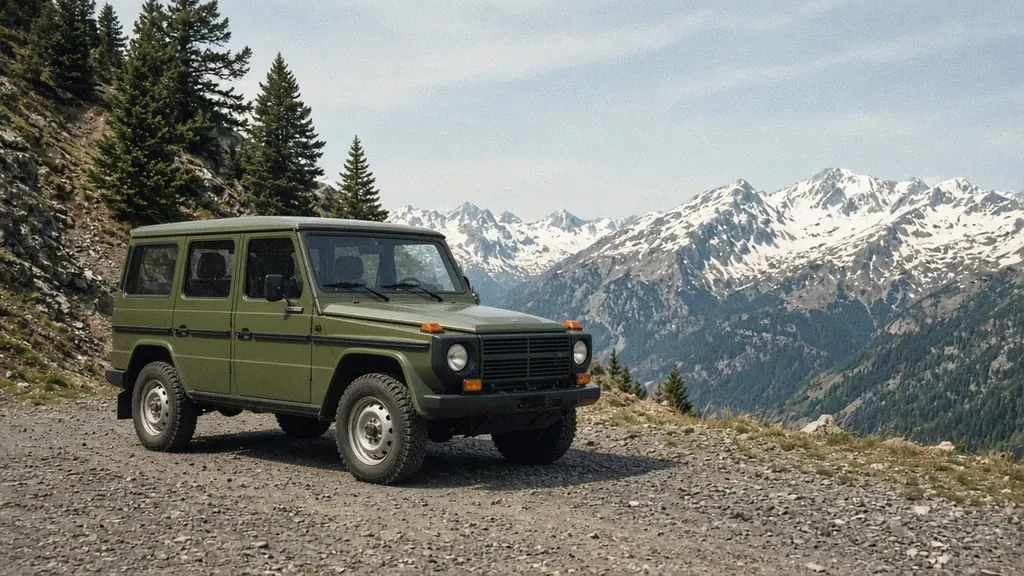
A classic G-Wagon looks indestructible, and mechanically it is very tough. But the W460 and W463 have a set of well-known weaknesses that can turn an attractive purchase into an expensive restoration. Most of them involve water: where it collects, where it gets in and what it damages. This checklist walks through a thorough pre-purchase inspection, roughly in the order we do it, so you can make a clear decision and negotiate from facts.
Before you go
Ask the seller for the chassis number, the service records and photographs of the underside. Check that the chassis number on the vehicle matches the documents. Arrange to see the vehicle in daylight, ideally on a lift, and ask for the engine to be cold. Bring a torch, a mirror, an inspection camera, a multimeter and, for OBD-equipped W463s, a code reader.
Rear spring cups and shock perches
The rear coil spring seats, often called spring cups or spring perches, and the shock absorber mounts on the rear axle are among the most common serious rust areas on the G-Class. Mud and water collect in them and rot them from the inside. In advanced cases the spring seat can fail.
Look closely at the rear axle where the springs sit, and around the lower shock mounts. Probe gently. Repair sections are available and a skilled welder can replace them, but the work requires the springs to come out. Check the front spring seats too, though the rear are more commonly affected.
The windscreen frame
The windscreen frame is a well-known rust area. Water gets behind the windscreen seal and corrodes the frame, especially at the bottom corners and along the lower edge. Look for bubbling paint around the seal and check the footwells below for signs of water ingress. Repairing a windscreen frame properly requires removing the glass and often the dashboard, so it is not a trivial job.
Sunroof drains
On vehicles with a sunroof, the drain tubes run from the corners of the sunroof tray down through the pillars. When they block with debris, water overflows into the headlining, down the pillars and into the footwells and electrical components. Ask whether the drains have been cleared. Look for water stains on the headlining, damp carpets and corrosion on the seat rails. Pour a small amount of water into the sunroof channel and check that it drains out underneath the vehicle.
Sills and door bottoms
Check the sills, the lower door edges and the door hinges. G-Class doors are heavy and the hinges wear over time, causing the doors to drop and the locks to bind. Look for rust at the bottom of each door and underneath the sill trims. An inspection camera inserted through drain holes can reveal hidden corrosion inside the sills.
Wheel-arch liners and fender flares
Plastic wheel-arch liners and fender flares trap mud and moisture against the body. Corrosion can develop behind them undetected. Where possible, look behind the liners with a torch and mirror or an inspection camera. Pay attention to the area where the flares attach to the body, and around the rear wheel arches.
The rear SAM and water ingress (W463)
Later W463 models use electronic control modules, including a rear signal acquisition module (SAM), that sit low in the body. If water gets in through blocked drains, door seals or the rear door, it can damage the module and the wiring around it, causing a range of electrical faults: unreliable central locking, inoperative lights and warning messages.
Check for damp carpets in the rear load area, test every electrical function, and scan for stored fault codes. Repeated communication faults with no other explanation can indicate water damage. A scan with an OBD-II scanner that supports Mercedes systems is quick and revealing.
Window regulators and electrics
W463 electric window regulators are a known weak point. Test each window repeatedly, listening for grinding or slipping and watching for slow or uneven movement. Test the central locking, which on many classic Gs is vacuum or pneumatically operated, and listen for a pump running continuously, which can indicate a leak in the system.
Check charging voltage with a multimeter: roughly 12.4 to 12.7 volts at rest and around 13.8 to 14.4 volts with the engine running is normal for most systems.
Differential locks and drivetrain
Test all three differential locks. On the W463, they engage in sequence: centre, then rear, then front. Confirm the dashboard indicators illuminate and the locks disengage properly. Seized lock actuators are common on vehicles that have never been used off road. Listen for whining or clunking from the differentials and check for leaks at the axles, gearbox and transfer case.
Engine
Classic G-Wagons were offered with a wide range of petrol and diesel engines over the years. Whatever the engine, check for oil leaks, listen for unusual noises on a cold start, check for smoke and look at the coolant for contamination. Ask for service records, especially for timing chain and cooling system work.
Frame and underside
The G-Class frame is strong, but check it carefully, particularly the rear crossmember, the area around the fuel tank, the body mounts and the suspension mounting points. Look for signs of poorly repaired accident damage.
Interior
Check the condition of the seats, carpets and headlining, and look for signs of water damage. Damp or musty smells are a warning. Test the heating and air conditioning. Check that all the switches and gauges work.
Test drive
Drive on a variety of roads. Check that the steering is reasonably precise for a recirculating-ball system, the brakes pull up straight and the gearbox shifts smoothly. Listen for clunks over bumps, which may indicate worn bushes or shock absorbers.
Scoring and negotiation
- Minor: worn window regulators, minor interior wear, overdue fluid services.
- Moderate: spring cup repairs, seized differential lock actuators, blocked sunroof drains with no electrical damage yet.
- Major: extensive windscreen frame rust, significant water damage to modules and wiring, structural frame corrosion.
A G-Wagon with a few minor issues and a solid body is usually a much better purchase than a glossy example with hidden structural or electrical problems.
Once you own one, our custom G-Wagon parts guide explains which upgrades are worth it. For history and specifications, see the G-Wagon page, and to source parts, browse G-Wagon parts or send us a custom request.
Related