Buying guide
80 Series Land Cruiser buyer’s guide
The FJ80 and HDJ80 are the sweet spot of classic Land Cruiser ownership: coil-sprung, comfortable and close to indestructible. Close to. Here is what to check.
Disclosure: this article contains affiliate links. If you buy through them, The Reserve Collection may earn a commission at no extra cost to you. It never changes what we recommend. Read our full disclosure.

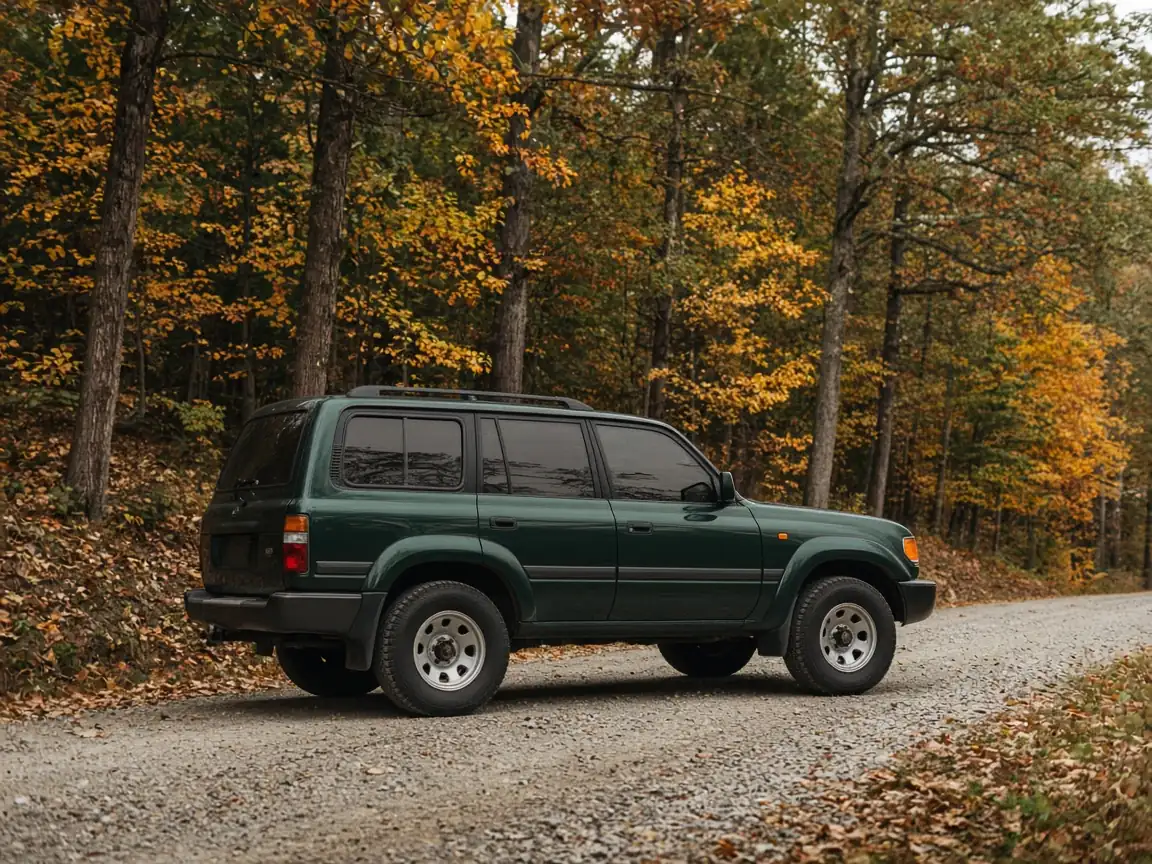
The 80 Series Land Cruiser hits a rare sweet spot. It has coil springs on solid axles at both ends, full-time four-wheel drive, a comfortable cabin, and enough durability that high-mileage examples are commonplace. Prices for good ones have risen steadily, which makes careful inspection more important than ever. This guide covers the specific things to check on an 80 Series before you buy: frame rust, the 1FZ-FE engine and its head gasket, whether the factory locking differentials actually work, front knuckle service and the suspension upgrade almost everyone fits.
Quick background
Toyota built the 80 Series from 1990 until it was replaced by the 100 Series in 1998. North American buyers received petrol models, initially with the 3F-E inline six and from 1993 with the 4.5-litre 1FZ-FE twin-cam six. Other markets also received diesels, including the 1HZ and the turbocharged 1HD-T and 1HD-FT, which are highly sought after. Many vehicles were sold under the Lexus LX 450 name in North America in later years, sharing most of the mechanical specification.
Front and rear electric locking differentials were optional in many markets, and their presence significantly increases a vehicle’s value and capability.
Frame rust: start underneath
The 80 Series frame is a strong ladder design, but salted roads take their toll. Inspect it before anything else, because a seriously corroded frame can turn a good-looking truck into a project.
- Rear crossmember and rear frame rails: look closely at the area behind the rear axle, around the spare wheel and tow hitch mounting. Probe any scale gently.
- Inside the rails: the frame is boxed in places; use a torch and mirror or a borescope through the drain holes.
- Suspension mounts: check the coil spring seats, the control arm brackets and the Panhard rod mounts at both ends.
- Body mounts: check the rubber mounts and the frame brackets around them.
- Body rust: the rear quarter panels, the tailgate bottoms, the rocker panels and the windscreen surround are common areas.
Surface rust on the frame is normal. Flaking scale, holes and soft metal are not. If you live somewhere that salts roads, prioritise trucks with a known history in drier climates.
The 1FZ-FE engine and its head gasket
The 1FZ-FE is a robust 4.5-litre six with a long service life when maintained, but high-mileage examples are known for head gasket failures, often following an overheating event or long-term cooling neglect. A head gasket repair on a 1FZ is a substantial job, so you want to know before you buy.
What to check
- Cold start: ask for the engine to be cold when you arrive. Watch for white smoke with a sweet smell, which suggests coolant burning.
- Coolant reservoir: look for oil, bubbles or a level that drops after a test drive.
- Oil: check the dipstick and the filler cap for a milky residue.
- Pressure and combustion gas test: a cooling system pressure test and a block test for combustion gases in the coolant are inexpensive and revealing.
- Records: look for a history of radiator replacement, regular coolant changes and attention to the cooling fan clutch.
Also ask about the heater hoses at the rear of the cylinder head. These are a known weak point on the 80 Series; a burst hose can cause rapid coolant loss and overheating. Replacing them is preventive maintenance, and evidence that it has been done is reassuring.
Owning a cooling system pressure tester lets you check the system yourself at every service.
Do the factory lockers work?
A locker-equipped 80 is worth more, but only if the lockers function. Many owners never use them, and actuators can seize from neglect. Test them on any vehicle you are considering.
- Find a safe, loose surface, such as gravel or grass, where you can drive slowly without damaging anything.
- Stop, select low range and engage the centre differential lock first. The axle lockers are designed to engage only once the centre is locked, and the front locker only after the rear.
- Turn the locker switch to the rear position. The dashboard indicator should light steadily, not flash.
- Turn to the front position, where fitted, and check the indicator again.
- Drive slowly in a gentle turn. With lockers engaged, you should feel the vehicle resist turning; the inside tyre may scrub.
- Disengage and confirm the indicators go out.
A flashing indicator often means the locker has not engaged, which can be due to a seized actuator or faulty wiring. Seized actuators can sometimes be freed with use and cleaning, but treat a non-working locker as a price-negotiation item.
Front knuckle service
The 80 Series front axle uses closed knuckles containing the constant-velocity joints (Birfields) and trunnion bearings. The knuckle seals eventually wear and let grease weep onto the axle housings, a common sight on neglected trucks. A full knuckle service involves new seals, bearings, gaskets and fresh grease, and correct trunnion bearing preload. It is a significant but well-documented job.
Look for grease weeping around the front knuckles, check for play in the front wheels by rocking them top to bottom with the wheel off the ground, and listen for clicking on full lock, which suggests a worn CV joint. Ask when the knuckles were last serviced. If there is no record, budget for it. A knuckle rebuild kit contains the seals and bearings you need.
Other things to check
- Transmission: the automatic gearboxes are generally strong; check for smooth shifts and clean fluid.
- Propshafts: check for play in the universal joints and slip splines.
- Brakes: check pedal feel, braking in a straight line and the condition of the rotors.
- Electrics: test the windows, mirrors, sunroof where fitted, and the climate control.
- Dashboard: cracked dashboards are common and cosmetic, but replacements are not cheap.
- Interior water leaks: check carpets for dampness from the sunroof or windscreen seals.
The suspension upgrade nearly everyone fits
Most 80 Series trucks are now on tired springs and worn shock absorbers. Replacing them is the single most noticeable improvement you can make. The common choice is a matched spring and shock kit providing a modest lift of about two inches, chosen for your expected load. Old Man Emu’s 80 Series kits are the long-standing benchmark, with spring options for different weights.
When lifting, consider caster correction for the front axle and check brake line length. Replace the suspension bushes, including the Panhard rod and control arm bushes, at the same time. Our Land Cruiser accessories guide covers tyres, protection and storage in the right order.
A simple decision framework
- Buy confidently: sound frame, healthy cooling system with records, working lockers or a known non-locker truck priced accordingly, serviced knuckles.
- Negotiate: weeping knuckles, seized locker actuators, tired suspension, cosmetic rust.
- Walk away: serious frame corrosion, evidence of severe overheating, or a seller who will not allow a cold start or an inspection underneath.
For the full Land Cruiser story and specifications, see our Land Cruiser page. Weighing the 80 against other classics? Read Land Cruiser vs Defender vs G-Wagon. For parts, browse Land Cruiser drivetrain parts or send us a custom request.
Related